
1
Epiphany Bonus
When entering Chaos, obtain 1 random Rare Card with an activated Epiphany.


Best Build Guide
 Void
Void Psionic
Last updated: 15/March/2026
Check all the starting cards & the EGO Card available for Tressa
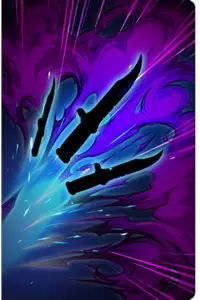
Dagger Throw
 Attack
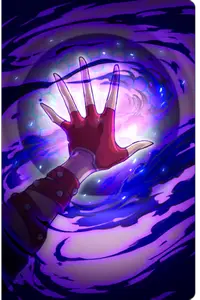
Touch of Darkness
 Skill
Skill
Show Effects
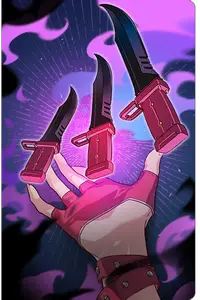
Unsheathe Dagger
Skill

Wave of Darkness
Ego Skill
Check all the epiphany cards available for Tressa

Curse
Skill
Show Effects
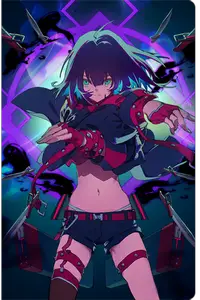
Shadow Reload
Skill
Show Effects
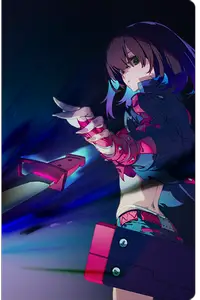
Vital Attack
Attack
Show Effects

Cursed Gouge
Skill
Show Effects
Epiphany cards are special evolutions for the cards you can obtain while playing the roguelike mode. Only some cards in the character's deck can get Epiphany effects. Since there's quite a lot of them, we don't display them by default — press the button below to show them.
Check all the generated cards available for Tressa
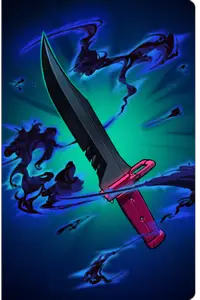
Shadow Dagger
Attack
Show Effects
Advanced Shadow Dagger
Attack
Show Effects
Applies frequent Agony (DoT) which deals Fixed Damage, ignoring Damage Reduction.
Generates an absurd amount of 0-cost Exhaust Attack Cards, which are beneficial for certain synergies
High hit count playstyle scales well with Morale and additive damage boosts
Very limited AoE only accessible via Epiphanies.
Agony damage is backloaded and takes time to deal its full damage.
Incredibly high action count can accelerate enemy actions.
Tressa is a Void attribute Psionic Combatant who specializes in both dealing damage over time via Agony and high-frequency attacks achieved through Shadow Dagger generation and spam.
Shadow Daggers are 0-cost attacks with [Exhaust], which most of her abilities either generate, upgrade or scale. Generating and using maximum daggers per turn is the goal of most Tressa decks thanks to the fact that they scale well with buffs and each applies Agony, which is crucial for Tressa’s core game plan.
Agony itself is the heart of Tressa’s kit and deals its damage traditionally at the end of the turn, dealing 50% Fixed Damage per stack of Agony, unique to each Combatant - up to a maximum of 20 stacks. When Agony activates, half of the current stacks on the enemy unit will be removed, rounding down. So when played optimally, Tressa can inflict 1000% Fixed Damage each turn via Agony, assuming she max stacks it every turn.
Where Tressa makes her mark as an Agony specialist, though, is that she has a way to bypass the standard Agony activation requirements via her "Cursed Gouge" skill.
Outside of her own damage and Agony synergies, Tressa doesn’t bring much else to the team though. Meaning the main reason to bring Tressa is if you’re looking for a DPS to play.
When aiming to maximize Tressa’s power, she’s looking for Draw Power to churn through her deck and access all her Shadow Dagger generation. Tressa would also ideally like to play alongside a Morale or Additive Damage buffing support to boost the low damage but high hit count Shadow Dagger spam Tressa unleashes each turn.
Tressa stands out as one of the characters with the highest access to 0-cost attack skills in the game, making her synergistic with many other Combatant playstyles. That aside, Tressa is perfectly functional by herself. When playing Tressa with a focus on her own kit, your goal should be to maximize Agony application by aligning Shadow Dagger use with Curse if possible. Outside of this, leverage her high AP efficiency cards when available and use her Agony payoff cards when you can.
Agony: Where the majority of Tressa’s damage scaling stems from. Agony is a debuff applied to enemies that will deal 50% Fixed Damage per stack of Agony on the target at the end of the turn and will then half the amount of Agony the target has, that is 20 stacks will go to 10, 10 will go to 5 etc. Agony has a hard limit cap of 20 stacks per enemy, per Combatant. If you have 3 Combatants who can all apply Agony, you could reach up to 60 Agony stacks on each enemy.
Fixed Damage: Fixed Damage cannot be increased or decreased by the usual additive or multiplicative +% bonuses.
Shadow Dagge: The basic version of Tressa’s Shadow Daggers, which most of her abilities generate cost 0 AP to use, have [Exhaust], deal a small amount of damage, but most importantly, they also apply 1 Agony.
Advanced Shadow Dagger: A harder-hitting version of Shadow Dagger, which inflicts 2 stacks of Agony instead of 1. In addition, it also has the [Retain] tag, which allows you to save it between turns. Advanced Shadow Dagger gains a +10% additive damage multiplier per stack of Agony on the target. This does include all sources of Agony, including those from other Combatants, up to a theoretical maximum of +600%.




Unsheathe Dagger III
 Upgrade
Curse IV
Upgrade
Show Effects
Vital Attack IV
Attack
Show Effects

Unsheathe Dagger II
Skill
Unsheathe Dagger
Skill
Shadow Reload
Skill
Show Effects
Vital Attack
Attack
Show Effects
Crimson Lumen
Attack
Show Effects
Void
 Order
Order
 Instinct
 AnteiaE4
 EloiseE4
 ZateraE4
CRIT Rate > CRIT DMG
Void DMG% > ATK%
ATK%
CRIT Rate% = CRIT DMG% > ATK > ATK% = DoT DMG%
ATK%
Void DMG% > ATK%
ATK%
DoT DMG% > ATK > ATK% > CRIT Rate% = CRIT DMG%
3-1: A must-have Potential Node when playing Tressa. Causes Dagger Throw to apply 2 Agony to the target on use. This is a huge upgrade to Tressa’s Basic Attack and gives them far more value in Chaos based game modes and even some play Potential in Save as well.
5-1: Adds +5% extra damage to Dagger Throw. Additionally, if Tressa’s Damage Over Time is greater than 15%, an additional +5% is added. A standard Base Damage increase to Tressa’s Basics is welcome, but not a game-changer like her 3-1 Potential. If you have the materials and you want a boost in Chaos or if you’re using Basics in Save Data game modes, you can pick it up, but it’s not a must-have node.
7: Grants +4% Void Attribute Damage when unlocked. If Tressa’s Damage Over Time is greater than 30%, another +4% is added. This is another must-have Potential Node for all Tressa builds.
Note: The Void Attribute Damage stacks additively with Void Attribute DMG% from Memory Fragments.
Tentacles is recommended over Criticism because Tressa's premiere build is alongside Hugo is the vast majority of the team's damage, so it's better to increase his damage over hers. In other teams, Criticism will be preferred.


Tentacles is recommended over Criticism because Tressa's premiere build is alongside Hugo is the vast majority of the team's damage, so it's better to increase his damage over hers. In other teams, Criticism will be preferred.


Tentacles is recommended over Criticism because Tressa's premiere build is alongside Hugo is the vast majority of the team's damage, so it's better to increase his damage over hers. In other teams, Criticism will be preferred.


Tentacles is recommended over Criticism because Tressa's premiere build is alongside Hugo is the vast majority of the team's damage, so it's better to increase his damage over hers. In other teams, Criticism will be preferred.
Tentacles is recommended over Criticism because Tressa's premiere build is alongside Hugo is the vast majority of the team's damage, so it's better to increase his damage over hers. In other teams, Criticism will be preferred.


Introduces Desire Cards. Desire Cards are cards that primarily exist to give a strong passive buff from meeting certain Desire Thresholds (3/5/7) which can only be done by having multiple ally decks also made in Season-4.
For Desire Threshold, it’s common to run 1 Claim / 1 Survival / 1 Inquiry for use in a variety of builds; however, it's also common to just do 3 ‘X’ to meet effect easier or do 2 'X' / 1 Inquiry (to keep Sample Collection as Card Effect). This is extremely dependent on ally desire cards and individual team building goal.
’X’ refers to a ‘Placeholder for Specific Desire Threshold Goal’, i.e. if you are building your team for 7 Claim then you might do 2 Claim / 1 Inquiry.
Introduces Persona Cards and Engravings. Persona Cards are powerful cards that introduce new playstyles or ways of buffing/debuffing. Engravings are effects that can be applied to both the Persona Cards and Equipment, functioning near identically to Refinements of Season-2 but with new effects.
There is no recommended Card Engraving, often times it will be specific to the team or skipped entirely (focusing just on Equipment Engravings).
The most common Equipment Engraving to optimize for is [When 15 or more cards are in Graveyard, +15% Critical Damage to Attack Cards of this unit], but this effect does not stack, so other equipment Engravings that increase damage can also be used.
Introduces Refinements, effects on Equipment that allow one to get additional Equipment effects for no Faint-Cost (post-S2), and God’s Hammer, a powerful effect that gives a random copy of any other Equipment effect on-top of current Equipment but costs 10 Faint Memory and is only gained from the Boss.
Increase Damage Amount of Attack Cards by 20%.
+30% Damage Amount of 1-cost or lower Attack Cards.
Because God’s Hammer is completely RNG at the end of the run, we do not have a specific recommendation since the player has very little control over the decision but for ATK-based Attackers usually ATK% gear is considered best and DEF-based Attackers DEF% gear is considered best.
Introduces Forbidden Cards, powerful cards that create new synergies and can only be acquired once per run (can be duped at one event or via save data editing).
Forbidden: Gesture of Freedom. Permanent Cost-Reduction to one card, can be manipulated.
Forbidden: Portrait of Fury. ++Draw, +Damage
Forbidden: Ecstasy of Violence. +Damage
Forbidden: Eternal Hunger. +Draw, ++AP (Ally Reliant)
Unsheathe Dagger
Skill
Unsheathe Dagger I
Skill
Unsheathe Dagger II
Skill
Unsheathe Dagger III
Upgrade
Unsheathe Dagger IV
Skill
Show Effects
Unsheathe Dagger V
Skill
Show Effects
Curse
Skill
Show Effects
Curse I
Skill
Show Effects
Curse II
Skill
Show Effects
Curse III
Skill
Show Effects
Curse IV
Upgrade
Show Effects
Curse V
Upgrade
Show Effects
Curse I: Now works for all cards, not just Attack Cards. This is a decent Agony application and is worth considering if you want to apply more Agony quickly, but the Agony cap being only 20 means that most popular Tressa builds (post-nerfs) basically do not need to optimize their Agony a ton to reach the cap after 1-2 turns, even without options like this.
Curse II: It is now a 2-turn duration instead of a 1-turn duration effect. This is a decent Agony application and is worth considering if you want to apply more Agony quickly, but the Agony cap being only 20 means that most popular Tressa builds (post-nerfs) basically do not need to optimize their Agony a ton to reach the cap after 1-2 turns, even without options like this.
Curse III: Becomes 4 Agony x 2, essentially 8 Agony. This is a decent Agony application and is worth considering if you want to apply more Agony quickly, but the Agony cap being only 20 means that most popular Tressa builds (post-nerfs) basically do not need to optimize their Agony a ton to reach the cap after 1-2 turns, even without options like this.
Curse IV: Changes to an Upgrade that adds 2 Agony at the start of the turn. This is by far the preferred option for Vital Attack IV builds, which are popular for Tressa carry (post-nerfs), as it allows you to hit the 3 Agony minimum for the Vital Attack IV condition with little effort. Even in other builds, it's still a great option since Tressa easily hits the Agony cap (20-stacks) with or without optimizing Agony a ton via Curse.
Curse V: Now a 2-cost Upgrade that adds an additional 1 Agony when Tressa applies Agony. This is a great option for Unsheath Dagger builds used to drive units like Hugo, as it will passively guarantee max Agony stacks with little effort; however, its cost of 2 can make it harder to justify over Curse IV, which allows you to do the same but with a 1-cost Upgrade.
Neutral: Target Neutral Epiphany: 1 Morale.
With 1 Morale for 1 Turn, Tressa can now act as a buffer on-top of a driver for her most notable teammates.
Divine: Which Divine Epiphany to go for will depend on what your team needs and which Epiphany you chose, but here are the main ones to look out for if you have spare Save Data: Draw 1, Morale/Resolve (Curse IV, Curse V).
Shadow Reload
Skill
Show Effects
Shadow Reload I
Attack
Show Effects
Shadow Reload II
Skill
Show Effects
Shadow Reload III
Skill
Show Effects
Shadow Reload IV
Skill
Show Effects
Shadow Reload V
Skill
Show Effects
Shadow Reload I: Is now an AOE attack that [Exhausts] all Shadow Daggers in hand and hits equal to the number exhausted. While the AOE is a bit nice, it essentially is using a separate attack to [Exhaust] your Shadow Daggers for around the same value as just playing them. The AOE could be better in some niche scenarios, but it falls behind basically any actual AOE unit in potential use, so it’s not recommended to play around with it.
Shadow Reload II: Changes to a 0-cost. Basically the same value as Neutral Epiphany–it makes the card ‘free’ to use and thus more justifiable as a keep rather than a remove.
Shadow Reload III: Now, an X-cost that makes Shadow Daggers = to AP consumed, some will randomly be Advanced Shadow Daggers. This is a great card to take in optimized Tressa builds that will have additional AP leftover, since it's just a few more attacks and maybe some Advanced Shadow Daggers as well.
Shadow Reload IV: [Exhaust] all Shadow Daggers and create Advanced Shadow Daggers = to the amount exhausted. This will exhaust Shadow Daggers that aren’t in hand, so it is by far the best way to generate Advanced Shadow Daggers, but it is still rather finicky to use.
Shadow Reload V: Changed to: discard all cards and create a Shadow Dagger for each card discarded, [Exhaust 2]. This is a weird card since it has good potential as a set-up card for longer fights, yet also has the [Exhaust 2] tag. The anti-synergy between it being a set-up card that doesn’t work well in low-turn counts, but it exhausting itself makes it a low recommendation.
Neutral: Target Neutral Epiphany: 2 Morale.
With 2 Morale for 1 Turn, Tressa can now act as a buffer on-top of a driver for her most notable teammates.
Divine: Which Divine Epiphany to go for will depend on what your team needs and which Epiphany you chose, but here are the main ones to look out for if you have spare Save Data: Draw 1.
Vital Attack
Attack
Show Effects
Vital Attack I
Attack
Show Effects
Vital Attack II
Attack
Show Effects
Vital Attack III
Attack
Show Effects
Vital Attack IV
Attack
Show Effects
Vital Attack V
Attack
Show Effects
Vital Attack I: Loses its previous damage buff but gains [Lead]. This falls behind in use-cases and damage compared to Vital Attack V, let alone Vital Attack IV, so it is not recommended. This is basically just a worse version of Vital Attack III.
Vital Attack II: If there is any Agony on target, gain a 70% additive buff. This falls behind in use-cases and damage compared to Vital Attack V, let alone Vital Attack IV, so it is not recommended.
Vital Attack III: Is now a 1-cost that applies 2-6 Agony but loses its previous damage buff. This falls behind in use-cases and damage compared to Vital Attack V, let alone Vital Attack IV, so it is not recommended; however, it does have the advantage of being 1-cost, so it’s easier to keep in your deck.
Vital Attack IV: Changes to be a 2-hit with effect: If there is at least 3 Agony on the target, now *activate* one more time. The keyword here is ‘activate’ as an additional activation will also proc any additional effects attached to using the card, such as Divine Epiphanies like Vulnerable or Hugo’s Commence the Hunt. This is by far her go-to Vital Attack post-nerfs, as the double-activation effect has a lot of synergy with any attack-use effects and Divines.
Vital Attack V: Now gains an additive 10% buff for every Agony on the target. Without Divine Epiphanies or many external buffs, this will perform similarly in damage (from itself) as Vital Attack IV. However, it is still not recommended as it falls behind with external buffers and does not have the double-activation synergies that IV can abuse.
Neutral: Target Neutral Epiphany: 3 Morale.
With 3 Morale for 1 Turn, Tressa can now act as a buffer on-top of a driver for her most notable teammates.
Divine: Which Divine Epiphany to go for will depend on what your team needs and which Epiphany you chose, but here are the main ones to look out for if you have spare Save Data: Vulnerable 2.




Unsheathe Dagger I: Changes to 0-cost. This is essentially equivalent to Neutral Epiphany, as it can give some decent QoL, but will fall behind in potential compared to Unsheath Dagger II.
Unsheathe Dagger II: Now creates 3 Shadow Daggers. This is the go-to Epiphany for most Tressa builds that are used to drive Hugo, or other units that can thrive off 0-cost attack spam (like pre-nerf Cassius), as it can allow for her highest amount of consistent Shadow Dagger generation.
Unsheathe Dagger III: Becomes an Upgrade that makes 1 Shadow Dagger at the start of the turn. This can be a great option in builds that don’t care about making a lot of Agony, such as some Vital Attack IV builds, which only need 3 Agony for its additional effect.
Unsheathe Dagger IV: The Shadow Daggers now give 2 additional Agony. This can help for hitting the 20-Agony cap a bit faster, but Tressa can already hit the Agony cap quite easily just via Curse; moreover, Agony-based builds tend to underperform compared to other playstyles post-nerfs (Season-2 Agony Changes that hard-capped it to 20-stacks).
Unsheathe Dagger V: Gains the [Exhaust] tag but now makes 4 Shadow Daggers. This is a great option for Hugo-Tressa OTK as it makes more attacks than any other option can for one turn. However, it will give no value after its first use, so it is not recommended outside of OTK.
Neutral: Target Neutral Epiphany: 2 Morale.
With 2 Morale for 1 Turn, Tressa can now act as a buffer on-top of a driver for her most notable teammates.
Divine: Which Divine Epiphany to go for will depend on what your team needs and which Epiphany you chose, but here are the main ones to look out for if you have spare Save Data: -1 Cost Reduction, Draw 1.