
1
Epiphany Bonus
When entering Chaos, obtain 1 random Rare Card with an activated Epiphany.


Best Build Guide
 Order
Order Hunter
Last updated: 11/March/2026
Check all the starting cards & the EGO Card available for Luke

Single Shot
 Attack

Shadow Concealment
 Skill
Skill
Show Effects
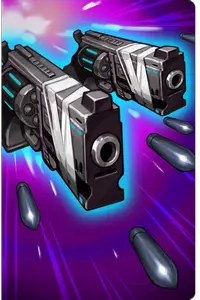
Rapid Fire (Luke)
Attack

Lethal Design
Ego Skill
Check all the epiphany cards available for Luke

Stealth Reload
Skill

Seize the Opportunity
Skill
Show Effects

Dance of the Demon
Attack

Finisher Round
Attack
Show Effects
Epiphany cards are special evolutions for the cards you can obtain while playing the roguelike mode. Only some cards in the character's deck can get Epiphany effects. Since there's quite a lot of them, we don't display them by default — press the button below to show them.
Check all the generated cards available for Luke

Magnum Shot
Attack
Show Effects

Silver Shot
Attack
Show Effects

Uranium Shot
Attack
Show Effects

Tracer
Attack
Show Effects
High-Velocity AP Round
Attack
Show Effects
Solid single-target damage, but must build enough Crit to properly access it.
Generates many 0-cost attacks for free with abilities that scale well with Morale like effects.
No AoE Cards.
Requires Crit investment to function at the highest level.
Hand space issues with [Retain] cards and status effects.
Needs a buffer to perform at an acceptable level.
Luke is a 5-Star Order attribute Hunter who comes prepared for any encounter, creating a constant flurry of bullets to gun his enemies down with precision.
Luke's playstyle revolves around their different "Shot"/Bullet cards that he generates via multiple of his cards.
Luke can access consistent Bullet generation via his Stealth Reload and Chain Fire cards that allow him to reload his magazine to continue his attack. He has inbuilt buffing capabilities to cards with the [Bullet] tag, opening up potential synergies to other characters who also use [Bullet] cards.
Luke does require a somewhat high Critical Hit Rate (50%+) to be able to consistently access Bullets from his “Chain Fire” card. However, there are many sources of additional Crit Chance through Partners, Gear and Potential Nodes that can help with fulfilling this requirement.
He doesn’t offer any Card Draw in his kit, thus it's best pairing him with units who can help cycle his deck to ensure he can continually generate [Bullet] cards to remain as effective as possible. Thanks to his low-cost Bullet Cards, he doesn’t demand AP to function. As most of hisAttack Cards have low base values and also have access to multi-hitting attacks, Luke benefits immensely from additive Damage buffs such as Morale.
In content where AoE excels, Luke may not be the best pick as he lacks any AoE from his cards. However, he can definitely dish out some extremely consistent single-target damage if built correctly and supported appropriately.
If you like the idea of overpowering your opponents with a non-stop barrage of Bullets, Luke definitely comes prepared.
Handgun Bullet Cards (Generated Bullets): 0 Cost Attack Cards generated through numerous parts of Luke’s kit. They can only be used on the turn they are generated due to the [Ephemeral] tag and [Exhaust] after being played.
These are the possible [Bullet] cards that can be generated:
Magnum Shot: 0 Cost Attack - 70% Damage.
Silver Shot: 0 Cost Attack - 50% Damage. Attack Weakness: Increase damage by 100%.
Uranium Shot: 0 Cost Attack - 50% Damage. If the target has Shield, increase damage by 100%.
Tracer Shot: 0 Cost Attack - 30% Damage. Mark 1.




Rapid Fire (Luke) II
Attack
Rapid Fire (Luke) II
Attack
Stealth Reload III
Skill
Dance of the Demon V
Attack

Negotiate
Skill
Show Effects
Rapid Fire (Luke) I
Attack
Show Effects
Stealth Reload V
Skill
Show Effects
Dance of the Demon II
Attack

Forgotten Grave
Skill
Show Effects

Shadow Concealment
Skill
Show Effects
Rapid Fire (Luke) II
Attack
Rapid Fire (Luke) II
Attack
Stealth Reload III
Skill
Seize the Opportunity
Skill
Show Effects
Dance of the Demon V
Attack

Spore Harvester
Skill
Show Effects
Order Order
Order
 Instinct
 SeritheaE4
 YuriE4


CRIT Rate > CRIT DMG
Order DMG% > ATK%
ATK%
CRIT Rate% = CRIT DMG% > ATK > ATK%
Luke’s Signature Potentials offer significant damage boosts as well as some additional functionality, making them a high priority to unlock.
3-1: Adds the [Bullet] tag to his Basic Attacks, helping set up combos with his Unique cards.
5-1: Adds an extra 5% damage to Luke’s Basic Attack Cards, with an additional 5% if his Crit Chance is above 20%. A moderate bonus, but welcome since Luke tends to want to keep his basics for consistency.
7: Gives an extra 3% Generated Bullet Damage if Luke’s Crit Chance is above 40%, with an extra 2% for every 5% Crit Chance above that. Can be stacked up to a total of 12% extra damage if you can get your Crit Chance high enough.
Fun Fact: Even though majority of Luke's damage is not Extra Attack, in optimized setups close to 1/3 of it can end up being Extra Attacks because of Tracer Shots applying Mark! This makes Extra Attack damage increases like Second Method comparable to other generic damage options (Obsidian, Sword Reflected in Lake, etc.).


Introduces Desire Cards. Desire Cards are cards that primarily exist to give a strong passive buff from meeting certain Desire Thresholds (3/5/7) which can only be done by having multiple ally decks also made in Season-4.
For Desire Threshold, it’s common to run 1 Claim / 1 Survival / 1 Inquiry for use in a variety of builds; however, it's also common to just do 3 ‘X’ to meet effect easier or do 2 'X' / 1 Inquiry (to keep Sample Collection as Card Effect). This is extremely dependent on ally desire cards and individual team building goal.
'X’ refers to a ‘Placeholder for Specific Desire Threshold Goal’, i.e. if you are building your team for 7 Claim then you might do 2 Claim / 1 Inquiry.
Introduces Persona Cards and Engravings. Persona Cards are powerful cards that introduce new playstyles or ways of buffing/debuffing. Engravings are effects that can be applied to both the Persona Cards and Equipment, functioning near identically to Refinements of Season-2 but with new effects.
There is no recommended Card Engraving, often times it will be specific to the team or skipped entirely (focusing just on Equipment Engravings).
The most common Equipment Engraving to optimize for is [When 15 or more cards are in Graveyard, +15% Critical Damage to Attack Cards of this unit], but this effect does not stack, so other equipment Engravings that increase damage can also be used.
Introduces Refinements, effects on Equipment that allow one to get additional Equipment effects for no Faint-Cost (post-S2), and God’s Hammer, a powerful effect that gives a random copy of any other Equipment effect on-top of current Equipment but costs 10 Faint Memory and is only gained from the Boss.
Increase Damage Amount of Attack Cards by 20%.
+30% Damage Amount of 1-cost or lower Attack Cards.
Because God’s Hammer is completely RNG at the end of the run, we do not have a specific recommendation since the player has very little control over the decision but for ATK-based Attackers usually ATK% gear is considered best and DEF-based Attackers DEF% gear is considered best.
Introduces Forbidden Cards, powerful cards that create new synergies and can only be acquired once per run (can be duped at one event or via save data editing).
Forbidden: Gesture of Freedom. Permanent Cost-Reduction to one card, can be manipulated.
Forbidden: Portrait of Fury. ++Draw, +Damage
Forbidden: Ecstasy of Violence. +Damage
Forbidden: Eternal Hunger. +Draw, ++AP (Ally Reliant)
Rapid Fire (Luke)
Attack
Rapid Fire (Luke) I
Attack
Show Effects
Rapid Fire (Luke) II
Attack
Rapid Fire (Luke) III
Attack
Rapid Fire (Luke) IV
Attack
Show Effects
Rapid Fire (Luke) V
Attack
Stealth Reload
Skill
Stealth Reload I
Skill
Stealth Reload II
Skill
Stealth Reload III
Skill
Stealth Reload IV
 Upgrade
Stealth Reload V
Skill
Show Effects
Stealth Reload I: Now, the [Bullet] cards you make have increased Crit Rate. This can lower the Crit threshold you need for Luke even more, as it is yet another card with an increased Crit Rate effect. However, making more Bullets will generally be preferred.
Stealth Reload II: A very consistent and good 3 Bullet’s per skill use. This can be a preferred dupe choice when used alongside Hugo, as it enables Hugo’s Commence the Hunt via being a Skill Card.
Stealth Reload III: After its first turn of use, this should net 4 Bullets per turn, but will lose you 1 Bullet compared to Stealth Reload II on your first turn. This can be a preferred dupe choice when used alongside Hugo, as it enables Hugo’s Commence the Hunt via being a Skill Card.
Stealth Reload IV: While a 0-cost Upgrade is nice, it cuts down the number of Bullets you get from this card by over half.
Stealth Reload V: While this is a premiere option for OTK, it is even less valuable outside of it than Rapid Fire (Luke) I, as it is completely removed from your deck after use via [Exhaust]. It is not recommended to take unless you are sure your build will be primarily OTK-only.
Neutral: Target Neutral Epiphany: Draw 1, 1 AP.
While this can be a solid option, as the Neutral Epiphanies can elicit effects similar to that of Divines – it has the major downside of just making less [Bullet] options than alternatives which can hurt Luke’s potential a deceptive amount as he scales with every attack he does on Dance of the Demon, alongside typically driving a unit like Hugo or Selena.
Divine: Which Divine Epiphany to go for will depend on what your team needs and which Epiphany you chose, but here are the main ones to look out for if you have spare Save Data: Cost Reduction, Draw 1.
Seize the Opportunity
Skill
Show Effects
Seize the Opportunity I
Skill
Show Effects
Seize the Opportunity II
Skill
Show Effects
Seize the Opportunity III
Skill
Show Effects
Seize the Opportunity IV
Skill
Show Effects
Seize the Opportunity V
Upgrade
Show Effects
Seize the Opportunity I: The limit to this buff only being for ‘the next Bullet card’ can be extremely limiting and often very low value, since Luke’s Bullet cards are 1-hit attacks.
Seize the Opportunity II: The limit to this buff only being for ‘the next 2 Bullet cards’ can be extremely limiting and often very low value since Luke’s Bullet cards are 1-hit attacks.
Seize the Opportunity III: The buff now being applied to all Bullets for the entire turn makes it a much more enticing choice. Its buff can be equated to around 3.5 Morale (70% additive), which isn’t groundbreaking but will be a noticeable increase in damage. This is a preferred option when Elasticity (Boss Immunity to multihits past 7-hits) is active, which has become quite common.
Seize the Opportunity IV: This is the go-to Epiphany (when kept) as it synergizes very well with his highest way of dealing damage (Dance of the Demon) but it is often not taken because Dance of the Demon is countered by the common modifier Elasticity.
Seize the Opportunity V: While the buff is less than Seize III, this will be permanently active after being played and does not need to be drawn before your other attacks – thinning your deck. This is a preferred option when Elasticity (Boss Immunity to multihits past 7-hits) is active, which has become quite common.
Neutral: Target Neutral Epiphany: Draw 1, 1 AP.
This can be taken with Draw 1 simply for an efficient skill card activation when played with Hugo, but the effect itself isn't particularly good.
Divine: Which Divine Epiphany to go for will depend on what your team needs and which Epiphany you chose, but here are the main ones to look out for if you have spare Save Data: Cost Reduction, Draw 1.
Dance of the Demon
Attack
Dance of the Demon I
Attack
Dance of the Demon II
Attack
Dance of the Demon III
Attack
Show Effects
Dance of the Demon IV
Attack
Show Effects
Dance of the Demon V
Attack
Dance of the Demon I: While this card isn’t bad, its exclusivity to Bullet cards makes it worse than Dance of the Demon II, so it is generally not recommended for a generalizable or optimized build.
Dance of the Demon II: This card is just flat-out better than all other options, scaling not only with Luke’s cards or Bullet cards but ALL attacks. This can be utilized with Supports/Sub-DPS who do attacks as well, like Hugo and Cassius, to further increase his multi-hit.
Dance of the Demon III: While this card isn’t bad, its exclusivity to Bullet cards makes it worse than Dance of the Demon II, so it is generally not recommended for a generalizable or optimized build.
Dance of the Demon IV: This can potentially be used to support Metallization Amir (activate Amir attacks on shield gain), but is otherwise not recommended as Luke is not traditionally used as a shield unit.
Dance of the Demon V: This can easily be a 0-cost 5-hit Card, which is decently strong and can be considered versus enemies with Elasticity (Boss Immunity to multihits past 7-hits), but is generally not the go-to choice.
Neutral: While this card isn’t bad, its exclusivity to Bullet cards makes it worse than Dance of the Demon II, so Neutral Epiphanies are not recommended.
Divine: Which Divine Epiphany to go for will depend on what your team needs and which Epiphany you chose, but here are the main ones to look out for if you have spare Save Data: Cost Reduction.




Rapid Fire (Luke) I: The same card as base, but it gains the [Retrieve] tag. This is an exceptional card for t1 OTK as it enables him to increase his Bullet gain to 4 per Rapid Fire (Luke) on top of gaining an extra 2-hit of Rapid Fire (Luke) itself. Outside of OTK, it will perform worse since its [Retrieve] tag will be lost on use or at the turn end.
Rapid Fire (Luke) II: The card now hits 3-times, making a Bullet for each Critical still. This card is one of the most consistent options for Bullet generation, on top of being a card that scales well as an attack (with additive buffs) by itself.
Rapid Fire (Luke) III: The card now only hits once, only making one Bullet. In well-built Luke set-ups, this will be outperformed by options that make 3x to 4x the number of Bullet’s for the same one card use.
Rapid Fire (Luke) IV: The card no longer makes Bullets but does a bit more damage itself. While this can be nice if you have no other buffs, very often you are playing him with an additive buffer like Cassius or Rei, so this has very little benefit for what you lose, in the end.
Rapid Fire (Luke) V: While this card loses the [Bullet] tag, it supports a more Supportive draw playstyle, especially if you have Cost Reduction, since it can get Draw 2 per Rapid Fire (Luke) used.
Neutral: Target Neutral Epiphany: Draw 1.
While this can be a solid option, as the Neutral Epiphanies can elicit effects similar to that of Divines, it has the major downside of just making less Bullet options than alternatives like Rapid Fire (Luke) II and Rapid Fire (Luke) I which are his premiere ways of making his needed Bullet cards.
Divine: Which Divine Epiphany to go for will depend on what your team needs and which Epiphany you chose, but here are the main ones to look out for if you have spare Save Data: Cost Reduction.