
1
Epiphany Bonus
When entering Chaos, obtain 1 random Rare Card with an activated Epiphany.


Best Build Guide
 Passion
 Psionic
Last updated: 18.06.2026
Check all the starting cards & the EGO Card available for Tenebria
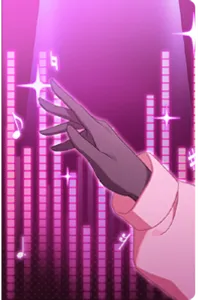
Sound Check
 Attack
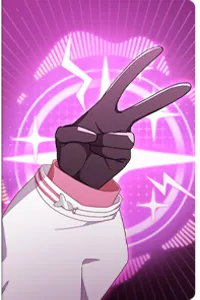
Fan Service
 Skill
Skill

Music, Start!
 Upgrade
Show Effects
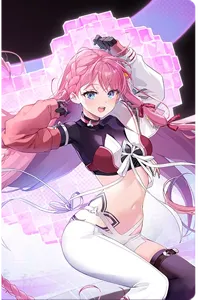
Everyone's Idol
Ego Skill
Show Effects
Check all the epiphany cards available for Tenebria

Spotlight
Attack
Show Effects

Call & Response
Attack
Show Effects

Encore
Attack
Show Effects

Photo Time
Skill
Show Effects
Epiphany cards are special evolutions for the cards you can obtain while playing the roguelike mode. Only some cards in the character's deck can get Epiphany effects. Since there's quite a lot of them, we don't display them by default — press the button below to show them.
Check all the generated cards available for Tenebria

Rhythm
Attack
Show Effects

Rhythm: Crescendo
Attack
Show Effects

Rhythm: Staccato
Attack
Show Effects

Rhythm: Fortissimo
Attack
Show Effects

Rhythm: Fermata
Skill
Show Effects
Rhythm: Arpeggio
Attack
Show Effects
Rhythm: Arpeggio
Attack
Show Effects
Rhythm: Arpeggio
Attack
Show Effects
Rhythm: Arpeggio
Attack
Show Effects
Rhythm: Arpeggio
Attack
Show Effects
Rhythm: Arpeggio
Attack
Show Effects

Photo Card
Skill
Show Effects
Add the following effect to Sound Check: Incinerate: Heal 50%.
At the start of battle, increase Damage Amount of Tenebria's Rhythm cards by 10%, and if Tenebria's Attack is 500 or higher, increase Damage Amount of other Combatants' Rhythm cards by 10% as well.
+2.4/12% Critical Damage.
If Tenebria's Attack is 600 or higher, +5% Passion Attribute Damage Amount, and for every 20 Attack exceeding 600, add an additional +2% (additional +10% max).
Increase Damage Amount of Performance Buzz for the Photo Time card from 100% to 150%.
At the start of battle, create 1 Photo Card card.
When an Ego Skill is used, inflict 200% Damage to random enemies for each of its original Cost.
Photo Card: 2 Ego Points.
Increase the Damage Amount increase effect that Everyone's Idol gives to Rhythm cards from 7% to 11%.
Each time a Rhythm card is moved to hand or activated, gain Everyone’s Cheer.
Everyone’s Cheer: Increase Tenebria’s Damage Amount by 1% (max 20 stacks).
When stacked to max, increase Damage Amount of Rhythm cards by 10%.
When a Photo Card is activated, decrease Cost of Tenebria's next Ego Skill used by 3.
When a Rhythm Card is activated, inflict 1 All Eyes On You on the target.
All Eyes On You: Increase Damage Amount received from Rhythm Cards by 40%. If a Rhythm card was not used manually, this monster becomes the target of those Rhythm cards.
When applied to a different target, remove All Eyes On You.
Strong synergy with Basic Attack buffs.
Saves ally supports 20-40 Faint Memory.
Can do a lot of damage quickly.
Lack of AoE damage.
Very AP-heavy.
Creating 6 Basic cards will reduce consistency.
Doesn’t pair well with sub-DPS style characters.
Tenebria is a 5-Star Passion Psionic combatant who might be a familiar face to some, coming from the Epic 7 universe. Tenebria is an Idol who rocks their enemies to the rhythm of the beat, leaving them awestruck.
Tenebria has access to 6 different types of “Rhythm” cards, each with a slightly different effect. A variant of Tenebria’s “Rhythm” cards is obtained at the start of battle by converting all Basic Attack cards in the deck through the “Music, Start!” card. Each one will adjust the way you play the deck and which combatants you pair her with.
Many of Tenebria’s “Rhythm” cards have a higher cost attached to them; you would be looking to pair her with other combatants who can help alleviate the high AP pressure of Tenebria in either the form of cost reduction, additional AP, or cards that can bypass costs by activating them without playing them directly for her to play as many of her cards per turn as possible. Tenebria herself can help with this thanks to her “Spotlight” card offering recycling and in-built cost reduction. Tenebria also can re-use cards already played that turn thanks to her “Encore” card, replaying the last activated card if it’s a “Rhythm” card.
When deciding on what combatants you want to pair with Tenebria, supporting characters that can offer AP generation will help fuel the high AP costs associated with her “Rhythm” cards. Characters who can offer multiplicative buffs will also have decent mileage, as the damage scaling on her “Rhythm” cards increases the Base Ratio. As her “Rhythm” cards are also Basic cards, any combatant who synergizes well with Basic cards can also be considered, such as Rei or Narja. Tenebria is also heavily reliant on a consistent draw engine that can allow her to cycle through each of her own cards to ensure she can re-use and re-cycle as many of her cards as possible to maximize her damage output.
Tenebria unfortunately has weaknesses when it comes to Save Data content; creating 6 Basic Cards can heavily clog the deck and brick opening hands, reducing overall consistency. Tenebria also lacks any form of AoE in her kit, which may potentially cause issues in content where AoE is required. Tenebria also requires more support than other DPS characters, restricting her potential to be paired with other combatants who fulfill a sub-DPS role. Because of this, Tenebria is positioned to be your primary or sole Carry on your team due to many of her cards' beneficial effects only applying to “Rhythm” cards. Tenebria’s kit doesn’t provide any sub-DPS qualities, as the majority of their draw or recycling capacities are, again, limited to “Rhythm” cards.
Tenebria still functions quite well in Chaos or Sortie, due to removing lower-impact Basic Attack cards from supporting characters and replacing them with “Rhythm” cards - Tenebria has very consistent early-stage damage output, allowing you to progress quite comfortably while building up your deck.
When putting this all together, Tenebria plays very much as a combo-style character. You’ll want to be cycling through your deck as much as possible - with cards like “Call & Response”. Play “Rhythm” cards, adding them back to your hand with “Spotlight” or re-using them via her “Encore” card, and finishing off the performance with her “Photo Time” Mythic card to deal follow-up damage.
Tenebria’s core mechanic revolves around her various “Rhythm” cards that can be generated from her “Music, Start!” card. Each Epiphany for “Music, Start!” will create a different “Rhythm” card that has a different effect, allowing Tenebria to have a slightly different play pattern, but generally are still posed to be your primary source of Damage. Rhythm cards by default always grant 1 stack of {Performance Burnout} whenever used.
Note: As Tenebria creates these “Rhythm” cards for their Allies, the cards created will have the element (Passion, Instinct, Order etc.) of the Combatants on your team. If Tenebria is on a Team with an Instinct and Order Combatant, 2 of each “Rhythm” card created will be Instinct, Order and Passion attributed.
Note: When Tenebria converts a Controller’s or Vanguard’s basic card, the new “Rhythm” card created will deal Defense-Based Damage instead.
Rhythm - It is the initial card offered from “Music, Start!”, a 2-Cost Basic Attack card that deals 60% damage to a single enemy, increasing its damage by +30% for each Rhythm card owned. In addition, when it’s played, it will activate 1 “Rhythm” in hand.
Rhythm: Crescendo - It is also a 2-Cost Basic-Attack card that deals 180% Damage to a single enemy, increasing its damage by +40% for each Rhythm card in the Graveyard. After being played, it will decrease the cost of the next “Rhythm” card played by 1 AP.
Rhythm: Staccato - A 1-Cost Basic-Attack Card that deals 80% damage to a single enemy, increasing by +50% for each Rhythm card owned. However, if the last card activated was a “Rhythm” card, the cost of this card will increase by 1 AP.
Rhythm: Fortissimo - A 2-Cost Basic-Attack Card that has the [Linked] and [Retain] tags. It deals 90% damage to a single enemy again, increasing its damage by +55% for each Linked Rhythm card before it’s played. If it’s played when 3 or more cards are [Linked], it adds 1 additional hit.
Note: If you activate multiple “Rhythm: Fortissimo” via a card that can activate multiple cards, the last two “Rhythm: Fortissimo” activated will not receive the additional hit multiplier. (Unless there are more than 3 linked cards when played)
Rhythm: Fermata - This is the odd card out, as it turns into a Basic Skill card instead. It has the [Haste] tag and costs 1 AP to use. When played, you select 1 of 4 Rhythm cards (Rhythm, Rhythm: Crescendo / Staccato / Fortissimo) to have all Rhythm cards changed into for 1 turn and then will draw 2 of them.
Rhythm: Arpeggio - When Tenebria creates Rhythm: Arpeggio, she will create 6 different variants of the card, with varying costs and effects - unlike her other Rhythm cards, which create 2 copies of the card for each combatant, all 6 “Rhythm: Arpeggio” will belong to Tenebria.
0-Cost - Rhythm: Arpeggio - Deals 15% Damage to a single enemy for each Rhythm card owned, draws 1 of the lowest-cost Rhythm cards and decreases the cost of that card by 1 until played.
1-Cost - Rhythm: Arpeggio - Deals 20% Damage to a single enemy for each Rhythm card owned, draws 2 of the lowest-cost Rhythm cards and decreases the cost of those cards by 1 until they’re played.
2-Cost - Rhythm: Arpeggio - Deals 40% Damage to a single enemy again for each Rhythm card owned. When played, will activate 1 of the Highest-Cost Rhythm cards in your hand.
3-Cost - Rhythm: Arpeggio - The 3-cost Rhythm: Arpeggio has the [Haste] tag, dealing 50% damage to a single target for each Rhythm card owned, and will activate the highest-cost Rhythm card from either your Draw Pile or your Discard Pile.
Note - Discard pile does NOT include the Used card pile.
4-Cost - Rhythm: Arpeggio - The 4-Cost Rhythm: Arpeggio also has the [Haste] tag and deals 80% Damage to a single target again for each Rhythm card owned. The cost of this card decreases by 1 for each Rhythm card in the Graveyard (includes the Used and Discard piles).
5-Cost - Rhythm: Arpeggio - The 5-Cost Rhythm: Arpeggio also has the [Haste] tag, dealing 90% Damage to an enemy for each Rhythm card owned. The cost of this card decreases by 1 for each Rhythm card activated this turn.
[Opener] - This is a new tag introduced by Tenebria that plays the card at the start of battle, as long as you have the AP to play it.
Performance Burnout - A debuff applied to Tenebria each time a “Rhythm” card is played. Once Tenebria reaches 30 stacks of Performance Burnout, she is unable to use any further “Rhythm” cards. At the end of the turn, all stacks of Performance Burnout are removed.
Performance Buzz - A buff granted to Tenebria via her Mythic card “Photo Time”. This can stack up to 10 times and deals 100% damage to random enemies for each stack of Performance Buzz.




Sound Check
Attack
Music, Start!
Upgrade
Show Effects

Spotlight III
Attack
Show Effects

Call & Response I
Attack
Show Effects

Encore III
Skill
Show Effects
Sound Check
Attack
Music, Start!
Upgrade
Show Effects
Spotlight III
Attack
Show Effects
Call & Response I
Attack
Show Effects
Encore III
Skill
Show Effects
Passion
 Void
Void
 Instinct Passion Void Instinct Passion Void Instinct Passion Void
 JusticeAriaE4AriaE0
 BriaE0
 EloiseE4
 ZateraE4EloiseE0


CRIT Rate > CRIT DMG
ATK% >= PASSION DMG%
ATK%
CRIT Rate% > CRIT DMG% > ATK > ATK%
CRIT RATE% = CRIT DMG% >= Unique Card DMG% > Common Card DMG% = Basic Card DMG%
3-1: Adds an [Incinerate] effect to Tenebria’s Basic-Attack Cards, providing a 50% heal. This ultimately does absolutely nothing outside of providing a small heal at the start of combat. Can be skipped.
5-1: Tenebria’s 5-1 Potential grants a 10% multiplicative damage buff to Tenebria’s Rhythm cards, additionally - if her attack is 500 or higher, will provide a 10% multiplicative damage buff to her allies Rhythm cards too. A substantial damage boost, as Tenebria’s damage scaling is Base ratio, making this quite a potent potential to unlock.
7: Tenebria’s 7 Potential grants Tenebria +5% Passion Attribute damage, and for every 20 Attack exceeding 600, will grant an additional +2% up to a maximum of 15% Passion Attribute Damage at 700 Attack. Definitely worth picking up.


Introduces Desire Cards. Desire Cards are cards that primarily exist to give a strong passive buff from meeting certain Desire Thresholds (3/5/7) which can only be done by having multiple ally decks also made in Season-4.
For Desire Threshold, it’s common to run 1 Claim / 1 Survival / 1 Inquiry for use in a variety of builds; however, it's also common to just do 3 ‘X’ to meet effect easier or do 2 'X' / 1 Inquiry (to keep Sample Collection as Card Effect). This is extremely dependent on ally desire cards and individual team building goal.
’X’ refers to a ‘Placeholder for Specific Desire Threshold Goal’, i.e. if you are building your team for 7 Claim then you might do 2 Claim / 1 Inquiry.
Introduces Persona Cards and Engravings. Persona Cards are powerful cards that introduce new playstyles or ways of buffing/debuffing. Engravings are effects that can be applied to both the Persona Cards and Equipment, functioning near identically to Refinements of Season-2 but with new effects.
There is no recommended Card Engraving, often times it will be specific to the team or skipped entirely (focusing just on Equipment Engravings).
The most common Equipment Engraving to optimize for is [When 15 or more cards are in Graveyard, +15% Critical Damage to Attack Cards of this unit], but this effect does not stack, so other equipment Engravings that increase damage can also be used.
Introduces Refinements, effects on Equipment that allow one to get additional Equipment effects for no Faint-Cost (post-S2), and God’s Hammer, a powerful effect that gives a random copy of any other Equipment effect on-top of current Equipment but costs 10 Faint Memory and is only gained from the Boss.
Increase Damage Amount of Attack Cards by 20%.
When an Attack Card is activated on a target in a Vulnerable state, +15% Critical Chance.
Increase Damage Amount of Extra Attacks by 25%.
Because God’s Hammer is completely RNG at the end of the run, we do not have a specific recommendation since the player has very little control over the decision but for ATK-based Attackers usually ATK% gear is considered best and DEF-based Attackers DEF% gear is considered best.
Introduces Forbidden Cards, powerful cards that create new synergies and can only be acquired once per run (can be duped at one event or via save data editing).
Forbidden: Gesture of Freedom. Permanent Cost-Reduction to one card, can be manipulated.
Forbidden: Portrait of Fury. ++Draw, +Damage
Forbidden: Ecstasy of Violence. +Damage
Forbidden: Eternal Hunger. +Draw, ++AP (Ally Reliant)
Music, Start!
Upgrade
Show Effects

Music, Start! I
Upgrade
Show Effects

Music, Start! II
Upgrade
Show Effects

Music, Start! III
Upgrade
Show Effects

Music, Start! IV
Upgrade
Show Effects

Music, Start! V
Upgrade
Show Effects
Spotlight
Attack
Show Effects

Spotlight I
Attack
Show Effects

Spotlight II
Upgrade
Show Effects
Spotlight III
Attack
Show Effects

Spotlight IV
Skill
Show Effects

Spotlight V
Attack
Show Effects
Spotlight I: Now draws 2, but only cost-reduces one. This option will generally be an upgrade to Spotlight (Neutral) and sometimes an upgrade to Spotlight III, but it will tend to be a downgrade more than it is an upgrade compared to Spotlight III, as the costs of Rhythm cards often will end up making Spotlight V’s 2-cost cheaper in the end.
Spotlight II: The card becomes an upgrade which makes a 0-cost base Epiphany Spotlight, once per turn. This effectively is just a better neutral Epiphany for Spotlight, as it is = to having AP and Draw 1 effects on Spotlight (Neutral) together, which are both neutral Epiphanies Psionics cannot currently acquire.
Spotlight III: Now is a 2-cost that auto-activates the cards moved. While the 2-cost is daunting, it will likely end up saving you AP in the end. One of the go-to Epiphanies for DMG-based builds, but there are variations that can use = to better options, making it not an option you will likely always take in practice.
Spotlight IV: Now moves 3 Rhythm to the top of draw, and draws 1 random. Initially this was bugged, but it has since been fixed and the select effect works as others do (selecting 1-cost Arpeggio last means that you will guarantee draw all Arpeggio's). This is an extremely reliable and consistent way of setting up for Tenebria that is a lot less AP and Draw intensive than alternative builds.
Spotlight V: Now a 0-cost which draws 2, but discards all non-Rhythm cards drawn through it. This is a solid Epiphany, especially since you can use it for both Draw and AP with a Divine, but its draw effect can be unreliable without certain synergies like Spotlight IV.
Neutral: Target Neutral Epiphany: Morale. While this option will result in less damage than alternative Epiphanies from Tenebria herself, Tenebria teams relying on certain cards like her Signature or Encore II will need a lot of morale to get high value out of them making this a competitive option in those instances. Still, that is not the recommended use of Tenebria, as she is generally played as a basic attack carry.
Divine: Which Divine Epiphany to go for will depend on what your team needs and which Epiphany you chose, but here are the main ones to look out for if you have spare Save Data: AP (Spotlight IV, V), Draw (Spotlight IV), Draw 1 Card of this Unit, Draw 1 Common Card & Treat as Common Card, 2 Vulnerable.
Call & Response
Attack
Show Effects
Call & Response I
Attack
Show Effects

Call & Response II
Attack
Show Effects

Call & Response III
Skill
Show Effects

Call & Response IV
Attack
Show Effects

Call & Response V
Attack
Show Effects
Call & Response I: Now Attunement: Draw 2, instead of Draw 1. This effect is incredibly strong and can alleviate most of the major draw issues of Tenebria, but it requires hand-space (at least 3-4) to capitalize off of, while Call & Response III only needs 2-3 and doesn’t take up an additional hand-space slot.
Call & Response II: Now a 2-hit that activates for free when a Rhythm card is played (hand or draw-pile). This is a solid option, but not enough damage to really justify losing the needed QoL that other builds give for most set-ups.
Call & Response III: Draw 2 Rhythm Cards & activates if in the draw pile when a Rhythm card is played. This Epiphany will easily net strong draw value and has a good chance to cost 0AP effectively.
Call & Response IV: Now does less damage per hit but gains a hit for every Rhythm played (up to 5). This is a solid damage Epiphany for a multi-hit Tenebria carry setup.
Call & Response V: Has a much higher base ratio and is now a 7-cost that decreases in cost for each Rhythm played. The counts as Rhythm card effect on this is less useful than alternative options like Neutral or Call & Response I since Tenebria is often played with Rei whose Strike of Darkness V will automatically trigger this (removing the +1 Rhythm bonus). The damage on it, itself can be quite high but it doesn't work with Encore's replay which hinders its carry potential quite heavily.
Neutral: Target Neutral Epiphany: Morale. While this option will result in less damage than alternative Epiphanies from Tenebria herself, Tenebria teams relying on certain cards like her Signature or Encore II will need a lot of morale to get high value out of them making this a competitive option in those instances. Still, that is not the recommended use of Tenebria, as she is generally played as a basic attack carry.
Divine: Which Divine Epiphany to go for will depend on what your team needs and which Epiphany you chose, but here are the main ones to look out for if you have spare Save Data: Draw 1 (Call & Response III), Draw 1 of this Unit, Draw 1 Common & Treat as Common, Cost-Reduction.
Encore
Attack
Show Effects

Encore I
Attack
Show Effects

Encore II
Upgrade
Show Effects
Encore III
Skill
Show Effects

Encore IV
Skill
Show Effects

Encore V
Skill
Show Effects
Encore I: Ability to activate last used Rhythm card 2x. NOTE: This currently does not work with Call & Response’s ‘Rhythm card while in hand effect’. Even though this doesn’t work with Call & Response, it is effectively the same value as Spotlight III but costs 1 less AP.
Encore II: Becomes an upgrade which adds an additional non-card hit effect for every 2 Rhythm played. This is a decent card as it will passively add hits to Tenebria, but it’s hard to get full value off of it since most Tenebria decks won’t play as many Rhythm cards as it asks, or even close to, on-top of it not working with Tenebria's main source of buffs (Basic Attack Buffs, likely from Rei or herself).
Encore III: Now is a skill which reduces the cost of the next 3 Rhythm cards and adds one hit. While this option is not preferred when used with certain allies, it can be equivalent or better than much more AP-expensive alternatives.
Encore IV: Card changes to be 3-cost with an effect of activating all Rhythm cards in the Graveyard. This basically works like Heidemarie’s Sword Rain III, activating 5-6 Passion attacks from the Graveyard (and therefore activating any effects that each Passion attack would trigger). However, this costs 3x as much and can’t be duped, making it a much worse option than Heidemarie’s Sword Rain III.
Encore V: One of her best draw cards, especially when paired with Spotlight IV. Its ability to activate Divines multiple times also makes it a great AP card. However, it often requires very specific set-ups that sacrifice damage, as Encore III or Encore I will add more raw damage most of the time.
Neutral: Target Neutral Epiphany: Morale. While this option will result in less damage than alternative Epiphanies from Tenebria herself, Tenebria teams relying on certain cards like her Signature or Encore II will need a lot of morale to get high value out of them making this a competitive option in those instances. Still, that is not the recommended use of Tenebria, as she is generally played as a basic attack carry.
Divine: Which Divine Epiphany to go for will depend on what your team needs and which Epiphany you chose, but here are the main ones to look out for if you have spare Save Data: Draw 1 Card of this Unit, Draw 1 Common & Treat as Common, Draw 1 (Encore IV, Encore III), Cost-Reduction, Vulnerable 2.





Music, Start! I: Makes Rhythm: Crescendo. Rhythm: Crescendo can reduce its cost after activating subsequent ones, allowing the player to eventually play them for 0-cost. The issue with Rhythm: Crescendo is that this ‘eventually’ comes rather late and its damage potential is worse than the high-cost Arpeggio's.
Music, Start! II: Makes Rhythm: Staccato. Rhythm: Staccato increases its cost when a Rhythm card was played before it, but does relatively high damage. This lacks ways to draw and/or reduce its cost, making it a harder option to play around than its competitor Epiphanies.
Music, Start! III: Makes Rhythm: Fortissimo. Rhythm: Fortissimo has [Link] and gains 1-hit when at least 3 [Link] cards are in hand. To get full value out of this Epiphany, the player will likely need an absurd amount of draw and AP on top of its damage per hit being lower than alternatives.
Music, Start! IV: Makes Rhythm: Fermata. Rhythm: Fermata allows the player to select one of the non-Arpeggio Rhythm options to convert all Rhythm cards into, and draw 2 of them every turn. This lessens a lot of the draw concerns that Rhythm cards can have and makes it much easier to build Tenebria than most alternative options besides Music, Start V.
Music, Start! V: Makes Rhythm: Arpeggio. Rhythm: Arpeggio gives 5 different Rhythm cards with varying costs and effects; the important thing to keep in mind is that the 4-cost one is the highest damage, and will decrease in cost as Rhythm cards are played, and the 0 and 1-cost ones have QoL elements that enable you to draw, activate, or play your other Rhythm cards much easier.
Neutral: Target Neutral Epiphany: Morale. This option is recommended more than some other epiphanies simply because the base Rhythm card tends to be a stronger and more consistent build than they are and not because of the neutrals themselves. Still, Morale is the recommended choice as most other neutrals do nothing to increase damage.
Divine: Which Divine Epiphany to go for will depend on what your team needs and which Epiphany you chose, but here are the main ones to look out for if you have spare Save Data: Morale/Resolve, Start-of-Turn Draw 2.